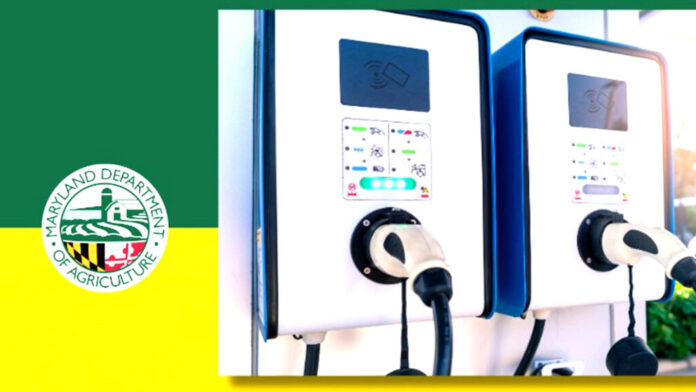

- Maryland will charge yearly per public EV charger port.
- Gasoline pumps will remain registered at only $20 each.
- Non-registered chargers may be disabled until compliant.
Maryland has long pitched itself as a leader in clean energy, aiming to put 1.1 million electric vehicles on its roads by 2030. As of October 2025, registration numbers are under 150,000, so the state is far from meeting its target or even its desired adoption rate.
var adpushup = window.adpushup = window.adpushup || {que:[]};
adpushup.que.push(function() {
if (adpushup.config.platform !== “DESKTOP”){
adpushup.triggerAd(“0f7e3106-c4d6-4db4-8135-c508879a76f8”);
} else {
adpushup.triggerAd(“82503191-e1d1-435a-874f-9c78a2a54a2f”);
}
});
Now, a new law is only going to make that goal harder to reach. That’s because it’ll likely reduce the number of available electric vehicle chargers across the state.
More: EV Charger Adapter Explodes Moments After Tesla Plugged In
Beginning on January 1, 2026, all public EV chargers in Maryland that accept any form of payment must register with the state’s Weights and Measures program. To do so will cost $150 per charging port annually.
var adpushup = window.adpushup = window.adpushup || {que:[]};
adpushup.que.push(function() {
if (adpushup.config.platform !== “DESKTOP”){
adpushup.triggerAd(“89c65a14-4682-4807-a4bb-5436c5361bee”);
} else{
adpushup.triggerAd(“f25825bd-1260-4574-84ce-2b26e315fad8”);
}
});
For common four-port Level 2 installations, that’ll be a cool $600 a year in state fees. By comparison, Maryland charges just $20 per gasoline pump nozzle.
The Maryland Department of Agriculture, which oversees Weights and Measures enforcement, tells Planetizen that the fee will help cover inspection, verification, and compliance efforts.
According to officials, inspectors will begin visiting sites in January to confirm registration and ensure chargers clearly display required information, including rates and responsible service contacts.
Charging ports that aren’t registered in time will end up being taken offline with a stop-use notice and a big red tag. Repairs or adjustments on non-compliant equipment will require approval by a registered service agency. In other words, EV owners in Maryland might have to change where they charge.
var adpushup = window.adpushup = window.adpushup || {que:[]};
adpushup.que.push(function() {
if (adpushup.config.platform !== “DESKTOP”){
adpushup.triggerAd(“bb7964e9-07de-4b06-a83e-ead35079d53c”);
} else {
adpushup.triggerAd(“9b1169d9-7a89-4971-a77f-1397f7588751”);
}
});
Who Pays the Price?
Independent operators and property owners who host chargers at apartments, condos, workplaces, hotels, or retail spaces have expressed concern over the change. They say the annual fee will impact the economics of maintaining the chargers they have that see lower usage rates.
Others argue that commercial fast-charging networks are better positioned to absorb the cost, while smaller charger hosts might end up having to take chargers offline to handle it.
var adpushup = window.adpushup = window.adpushup || {que:[]};
adpushup.que.push(function() {
if (adpushup.config.platform !== “DESKTOP”){
adpushup.triggerAd(“b25ecba7-3bbb-4ea7-a3a8-dbea91695c07”);
} else {
adpushup.triggerAd(“e46c436a-adeb-4b5e-a2c7-56bc36561c10”);
}
});
State inspectors are expected to begin accuracy testing of electricity metering in spring 2026. New charging hardware installed after January will require certified compliance before being activated for public use. How this all shakes out will be something that only time can tell.